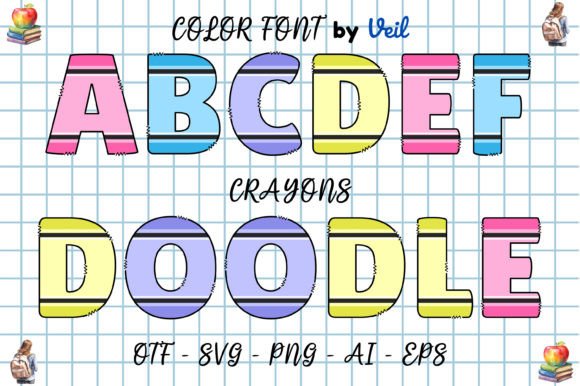
Crayons: The Playful Color Font for Modern Design
Imagine injecting the pure, unbridled joy of childhood art into a professional design project. That's the immediate, vibrant impact of Crayons, a color font designed to transform static text into a dynamic, tactile experience. For designers seeking to break free from monotony, this asset offers a direct line to creativity, warmth, and artistic flair.
What is a Color Font?
Before exploring its applications, it's crucial to understand the technology. Unlike traditional fonts that are single-color vectors, a color font like Crayons embeds rich, multi-color information directly into the font file. This allows you to type text that appears hand-drawn with actual crayons, complete with texture, shading, and a vibrant color palette—all without needing to convert text to outlines or apply complex layer styles. It’s a powerful tool for achieving a specific visual hierarchy and modern aesthetic with remarkable efficiency.
Practical Applications Across Creative Projects
The true value of Crayons lies in its versatility. Its playful, artistic feel is not a niche novelty but a strategic asset for numerous design scenarios where you need to connect with an audience on an emotional level.
- Branding & Logo Design: Use it for a boutique bakery, a children's education platform, or a creative studio logo to instantly communicate approachability and imagination. It helps build a memorable brand identity that stands out.
- Marketing & Social Media Graphics: Create scroll-stopping headlines for Instagram stories, Facebook ads, or email banners. Its inherent texture and color add visual interest, improving user engagement and click-through rates in digital marketing.
- Website & UI Design: Strategically apply it to hero section headlines, call-to-action buttons, or promotional banners to add a burst of personality. It can guide the user's eye and enhance the overall UX design by making interfaces feel more human and inviting.
- Packaging & Print Design: Elevate packaging design for toys, snacks, or artisanal goods. The tactile illusion of crayon marks translates beautifully to physical products, enhancing shelf appeal and editorial design layouts.
- Presentations & Merchandise: Move beyond bullet points. Use Crayons for slide titles or key takeaways to keep your audience engaged. It’s also perfect for designing merchandise like t-shirts, posters, and mugs where a fun, artistic vibe is desired.
Integrating Crayons into Your Design Workflow
Adopting a distinctive asset like this requires thoughtful integration. To ensure it enhances rather than overwhelms, consider these practical guidelines:
- Consistency is Key: Define where and how you'll use it. Perhaps only for primary headlines or specific callouts. This maintains a professional graphic design standard and strengthens your visual communication.
- Balance with Simplicity: Pair Crayons with clean, neutral sans-serif fonts for body text. This creates a clear visual hierarchy, ensuring readability while letting the playful font command attention.
- Color Harmony: While the font has its own palette, ensure it complements your project's overall color palette. You may need to adjust background colors to make the text pop without causing visual fatigue.
- Audience Alignment: Its playful nature is ideal for certain demographics and contexts. Always evaluate if the tone aligns with your audience's expectations and the project's goals, whether it's for web design or print design.
Thoughtful design is about making intentional choices that serve both form and function. Incorporating a high-quality creative asset like Crayons